


In today’s Market Pulse we dive into our Cybersecurity Fuel watchlist to discuss the topic of Security Operations Centers (SOC) and their transition to a service. SOC as a service gives customers a cloud-native SOC solution that also offers Security Information and Event Management (SIEM) allowing them to save time and resources on cyber threats. SOC as a service has been a frequent topic within our Fuel watchlist and many different use cases have been given. Below we have provided some SOC specific blogs curated by our Fuel watchlist:
Month: December 2020
How to Work with a Software Development Contractor

A common question we hear from early-stage startups is how to accelerate product development. Working with a software development contractor is often an essential approach for startups with tight budgets who need the ability to turn up and down expenses. The diversity of skillsets needed is often another great reason to go with contractors instead of full-time employees.
But what type of software development contractor is right for your startup? Let’s take a look at a few approaches and explore some best practices.
Types of Software Development Contractors
Independent Contractors
One of the most traditional approaches has always been independent contractors. If you have a strong network consisting of the skillsets you need, this may be one of the best approaches for you.
Getting talent from your network can usually mean you have more of a known commodity and trusted working relationship.
Remote Development
There are a lot of remote development options all over the world. These are companies that specialize in fostering a network of software developers, designers and project managers in order to customize a team for most jobs. But how do you know if this is a good fit for your company?
I like to think about this option when a company or project is ready for a full team of developers to tackle a project quickly. It’s essential that you have a really thought-out product feature set, user experience, mockups and requirements ready to start on. Remote dev teams will likely shine in these scenarios.
If your project is still forming or may have a lot of changes as things develop with your company, I suggest keeping more of your new product development in house to keep the team close to those changes.
Most remote development shops offer competitive rates and a breadth of different skills to put together a small team quickly. Some of the things I like to ask these companies when I speak with them are how long of a commitment for a project do they need and how easily can they scale the team up or down.
Freelance Platforms
Platforms like Upwork are also a solid approach and can be used in a variety of ways to find the right software development contractor for your needs. These platforms have a wide range of skill sets and allow for shorter to longer time frame jobs.
One approach that’s worked well for me on freelance platforms has been testing the waters with smaller jobs until you find a freelancer that provides a high level of communication and quality, then continuing to build a relationship with that freelancer through longer-term projects.
With freelance platforms, you should also look to build trust a little more slowly. These platforms do attract some less reputable folks, so keep an eye for odd requests about getting access to your systems early on in a relationship. Hold the freelancer accountable to prove themselves repeatedly until such access is given.
Contractor Management Best Practices
No matter the type of software development contractor you work with, the most successful relationships will come when you put the same amount of effort and relationship into them as if they were a full-time employee. Here are some best practices that have worked for us:
- Make sure you have a detail-oriented product or project manager on your team helping organize the backlog with your contract staff. Creating and managing a product backlog is the real art to keeping product development aligned with a vision and shouldn’t be outsourced.
- Take time to build a relationship. Get to know your contractor just like if they were part of your team. Someday they might be. The more you can communicate the overall vision, the more aligned a freelancer can be. This will help them to be more excited and passionate and will likely show in their work.
- Provide detailed scopes of work and success criteria. Same philosophy as measure twice and cut once.
- I prefer a high frequency of checking in, goal setting and payments. This keeps you very in tune with what work is being done and what’s next. I do this weekly with some of our contractors.
- Be understanding. Some weeks will be slower than expected, and some will be faster. Overall I look for consistent quality, communication and iteration, and only look to move on if those things aren’t met consistently.
As you can see, there’s a lot to consider when managing software development contractors, but these options can be used in a variety of ways. When done successfully they can really help to scale your product development efforts and keep costs within reason.
Market Pulse Data/AI: Machine Learning Driving CRM Software

This weekend, we present to you the Data/AI watchlist brought to you by our Fuel platform. Analyzing trends across our watchlist companies, we chose to highlight the growing number of sales solutions utilizing machine learning. By implementing AI-driven CRM software, companies can make quicker, more informed, and more favorable decisions throughout the sales cycle. As more organizations are relying on data to make decisions the sales department is the most recent to begin implementing machine learning into their software.
Fuel watchlist company, DataRobot, recently published an article discussing “20 Machine Learning Use Cases” to read more click here
Materialize Announces Two Series Investments Totaling $40M
On Monday, Materialize announced a $32M Series B round led by Kleiner Perkins with participation from Lightspeed Ventures. Simultaneously, the company also announced a previously closed Series A round for $8M; in total, the company has raised just over $40M since being founded in 2019.
Why This Transaction?
The York IE team chose this as our transaction of the week to show the need for real-time data streaming and talk about the benefits of using an intuitive query language like SQL. Given the growing number of internet-connected devices and continued digitization of businesses, there is no doubt that larger and larger amounts of data will continue to be created. For this reason, businesses should be searching for ways to get more out of their streamed data with less complexity and lower costs. For Materialize, the allure of building a platform using SQL was rooted in the idea that it makes real-time data analysis easier and more efficient. Another glaring advantage of SQL is its pervasive nature within the developer community; using a widely understood query language, like SQL, makes user adoption a much easier endeavor.
As stated above, real-time data streaming is a growing trend that has quickly taken precedence over legacy batch processing. Companies cannot rely solely on batch processing anymore given the complexity, frequency and sheer amount of data being processed every second. Data streaming however, offers simultaneous storage and processing and gives users more ability to articulate data. Simply put, data streaming enables companies to be proactive rather than reactive to their data and allows for informed decision making. As more industries are making the push towards automation and digitization, in a post-pandemic world, nearly every company has become a data-driven organization. In recent years, financial institutions have embraced digitization; with the help of data streaming, they are able to parse data to identify fraudulent activity and detect risk associated with default. Other industries like energy and manufacturing are implementing data streaming to help assist them with predictive modeling and system optimization. Regardless of the industry, it is clear that real-time data streaming is the current step in the evolution of data and analytics; organizations will likely continue to rely heavily on their data and real-time analytics to make informed decisions.
Improving Startup Processes With Technology Investments
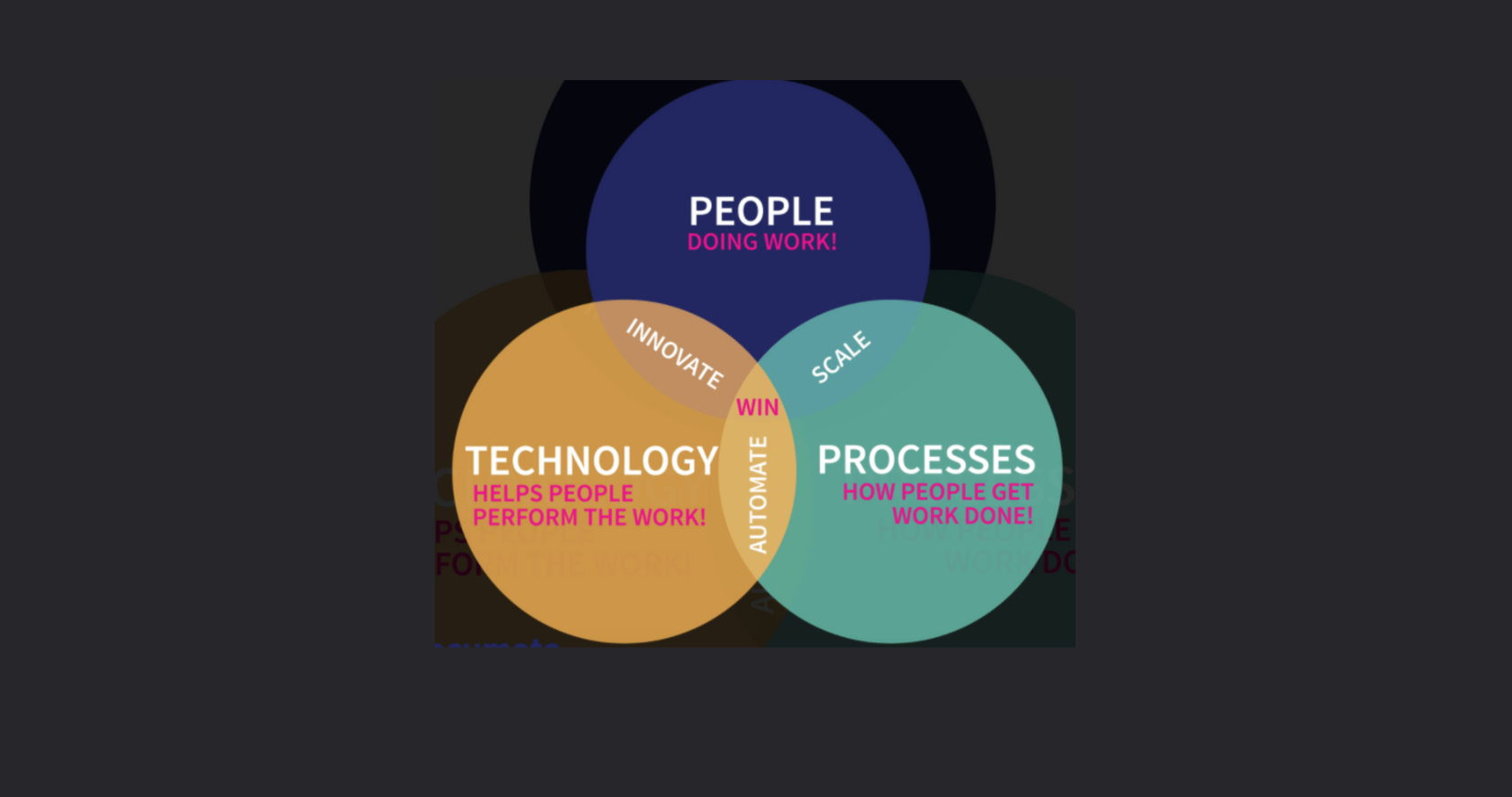
Many in the technology industry have heard the mantra people, process, and technology. All three components are required to work together for the successful scaling of any business. Many times, startups are very scrappy when it comes to a lot of things including processes.
Outgrowing Your Processes
It’s understandable, everyone is just looking to get their job done and grow as fast as possible on a very limited budget. Many times, startup processes are very manual, and as you grow, they take longer and longer to complete, and sometimes startups can outgrow processes. As time goes on, team members work longer hours and weekends, exception reports are created, manual processes continuously get created and go undocumented, and errors happen which lead to negative customer experiences.
Taking Action
Hopefully, during this growth stage, you’re not experiencing any revenue leakage or turnover in any key positions. In the early days of Dyn’s growth stage, it took several billing team members more than a week every month to manually process invoices in an open-source, homegrown billing system, which were then sent to customers. Every month it took longer and longer to complete this process. When the company reached $20M in ARR, a decision was made to automate billing processes and to do so in a cloud environment.
One of the many reasons this decision was made was the need to hire more people to support our growth rates and the impact that growth had on our manual billing processes. It was a clear signal that it was time to invest in this area and the ROI was relatively simple to figure out. Fast forward several months to what we were able to deliver through this initiative which was automated daily invoice and payment processing. It was very well received by employees and customers. It allowed the billing team to focus on other improvement projects, reduced errors, improved reporting and compliance, and allowed us to close the books faster.
Enhance Existing Processes
It was a big step required to scale the business. Billing system migrations are also a good time to document, optimize, standardize existing processes. It’s a very smart idea to do those things prior to any system selection or strategy initiatives. Your technology investments will only be as good as your processes so think long and hard about them!
Steve Perras is an experienced leader with a demonstrated history of working in the Internet and Financial industries. Steve is a Director of Business Systems at Right Networks.
Why Personal Brand Matters

A lot has been made of the importance of personal brand in today’s digitally-led business world, but why does it matter? Why should you set aside time, energy, and effort to get it right? Why is this important for the startup founder, individual employee, pro athlete, bar owner, or coach?
Start Now
Personally, I have always been deliberate about building, maintaining, and evolving my personal brand. For me, it’s been innate and something I’ve focused on since high school. But for many it can be unnatural, an afterthought, lapsed, or misunderstood. Most people who are against the premise often end up, over time, realizing it’s criticality to career success. Don’t find yourself playing catch-up when the need for a personal brand inevitably calls.
Your Personal Brand and Your Company’s
It’s imperative for founders, executives, and startup employees to incorporate their personal brand when building their company brand and vice versa to help drive market momentum. Executive platforms where market evangelism, corporate and career storytelling, disruptive thought leadership, pithy points of view, deep domain expertise, etc. are programatized and consistently executed against are fixtures of any successful company. Drumbeat marketing isn’t just about the company doing it, but the players on the field creating, sharing, advocating, and amplifying the message. You have to do it so much you annoy yourself because no one is really paying enough attention to you to matter.
Here are five core reasons you should focus on your business-oriented social and communication profiles (LinkedIn, Twitter, AngelList, Medium/Blog, CrunchBase, Website, Slack, & Email, etc.) to drive personal brand, as they are the foundation and megaphone and communication channels for the truest and most important thing to market — YOU!
- Career Narrative / Story Arc - Can you articulate your resume/CV in a meaningful and connected way? Do the moves you make sense?
- Relevance - Are you current, dynamic, fluid, and on point? In your company, speciality, function, interests, or industry?
- Networking - Are you extending your reach and leveraging your contacts? Do they really know YOU? Do you know THEM?
- Diversification – Are you well rounded in your business pursuits? Or are you a one-trick pony?
- Pride – Do you feel intrinsic passion and happiness in your career? Are you confident enough to share that with the world?
I always say to be loyal and play the long-game. Does your startup have personality? How are you ensuring you’re maximizing personal brand for the greatest career results? Share your thoughts! Share your brand!
*Repost from an older version on my personal Medium blog from 2015.